A Year of Momentum: An Update from The Almond Project
August 6, 2026
There's something grounding about working on a project that measures time in seasons. Each bloom reminds us why we started and each harvest shows us how far we’ve come. As we move into the final year of our formal scientific study, we find ourselves reflecting on how much has grown: the soil, yes, but also the coalition, the questions, and our shared vision for what almond farming can become.
The practices are working. Now we’re focusing on economics.
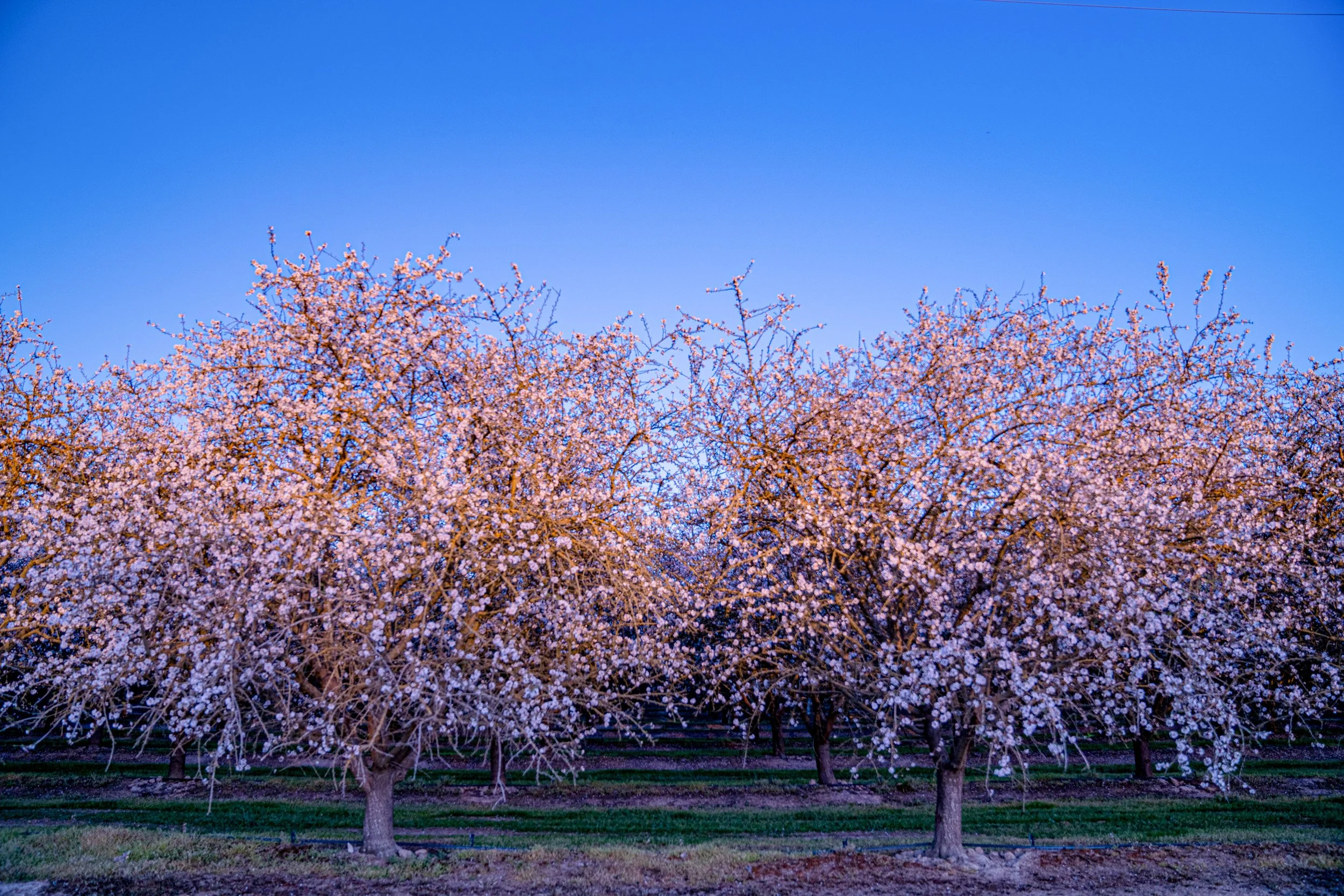
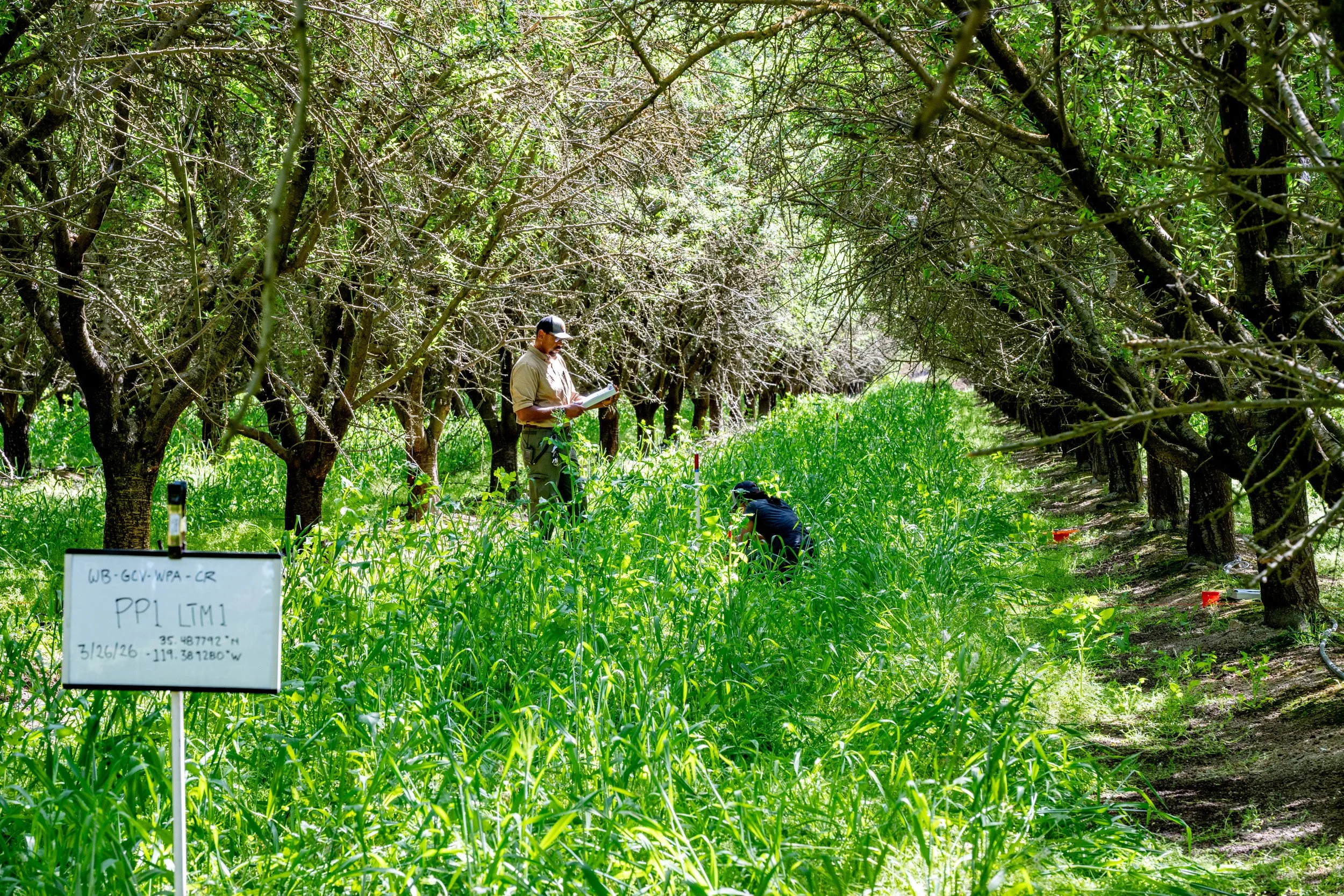
After five years of trialing soil health practices across 160 acres of almond orchards in the Southern San Joaquin Valley in California, including multi-species cover crops, sheep grazing, increased compost application, and nitrogen reduction, we can say with confidence that the practices work. When heavy rains fall, our cover-cropped fields absorb the water while neighboring fields flood. Soil that infiltrates faster holds more for the trees, with less running off, with real implications for irrigation efficiency and water use. The soil health indicators are showing early signs of carbon sequestration. Biodiversity is increasing.
The next challenge is equally important: building a financial case that works as well as the agronomic one. Until it does, the most promising practices in the world won't reach their potential.
For several consecutive years, commodity pricing sat below the cost of production. Some growers went bankrupt. Others sold land just to stay afloat. The market has shown signs of stabilizing as almond supply has contracted, and prices improved in 2025, but that recovery illustrates the deeper challenge rather than resolving it: profitability in this industry is tightly tied to year-to-year fluctuations that no individual farmer controls.
Input costs, water access, pollination reliability, weather, and global export dynamics all compound that instability. Downward pressure on commodity prices has intensified as more farmland shifts to ownership models that aren't tied to farming as a livelihood. Commodity markets move year to year, and that rhythm is fundamentally at odds with the long-term planning regenerative farming and long term sustainability planning requires.
Our Current Work
Everything we've learned points in the same direction: regenerative farming succeeds when better practices are matched with better economics, better incentives, and better systems of support. That's where we're focused now.
We’re considering what it would actually take to make regenerative almond farming viable and attractive at scale, including exploring premium pricing structures, long-term supply contracts that give farmers stability outside commodity price swings, and new financing approaches including loan guarantees that reduce the financial risk farmers absorb when transitioning to new practices.
We’re also exploring the potential to restore the "small water cycle” in the Central Valley — the local movement of water through soils, plants, and atmosphere that sustains rainfall and moderates temperature. Decades of land degradation, groundwater overdraft, and vegetation loss have weakened this cycle, contributing to increased runoff and regional drying that strain both farming and ecological health. To investigate what restoration could look like, we are developing a map of the Central Valley's small water cycle, identifying potential rehydration zones. From there, we will work with scientists to identify the most effective approaches and engage regional stakeholders to build support for implementation. We are completing our verification and certification research and will publish a guide outlining the key differences and opportunities within each program in Summer 2026.
Welcome to Our Newest Partners
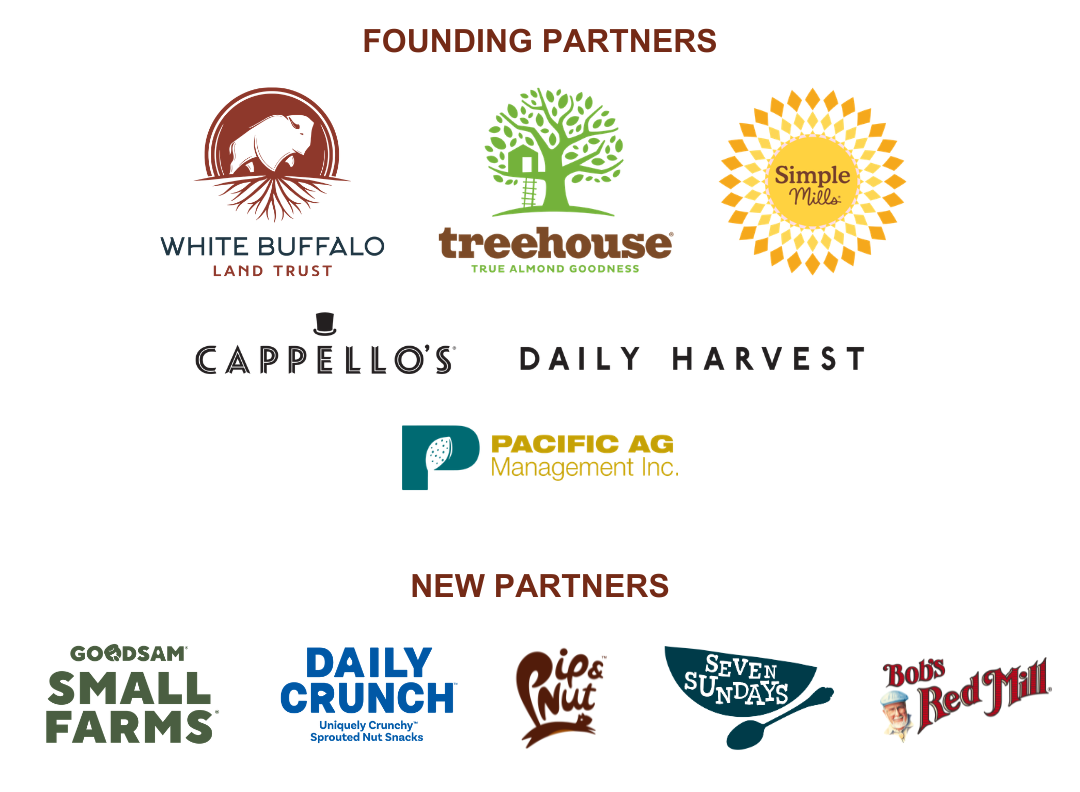
None of this work happens without a growing coalition of people who believe in it, and we are thrilled to welcome five new partners into The Almond Project family.
GoodSAM Foods makes snacks designed to be good for people, good for farmers, and good for the planet.
Daily Crunch Snacks brings uniquely crunchy sprouted nut snacks made with simple, clean ingredients, and a genuine commitment to what goes into their products from the ground up.
Pip & Nut, the UK's leading natural nut butter brand, extends our coalition across the Atlantic, a reminder that the story of California almonds matters to eaters and makers far beyond our borders.
Seven Sundays, a woman-founded, family-run B Corp breakfast company, brings a values-driven, people-first ethos.
Bob's Red Mill, a 100% employee-owned company and a pillar of wholesome, authentic ingredients since 1978, grounds us to the long tradition of doing food right.
Each of these partners joins us as co-investors in a different kind of future for almonds, and we're glad to be building it together.
Looking Ahead
As we enter the final phase of our scientific study, we look forward to sharing results in summer of 2027. Our coalition continues to grow and is shaped by its members, and we welcome you to be part of it.
Reach out to us at lauren@whitebuffalolandtrust.org.